


Loading...
Loading...
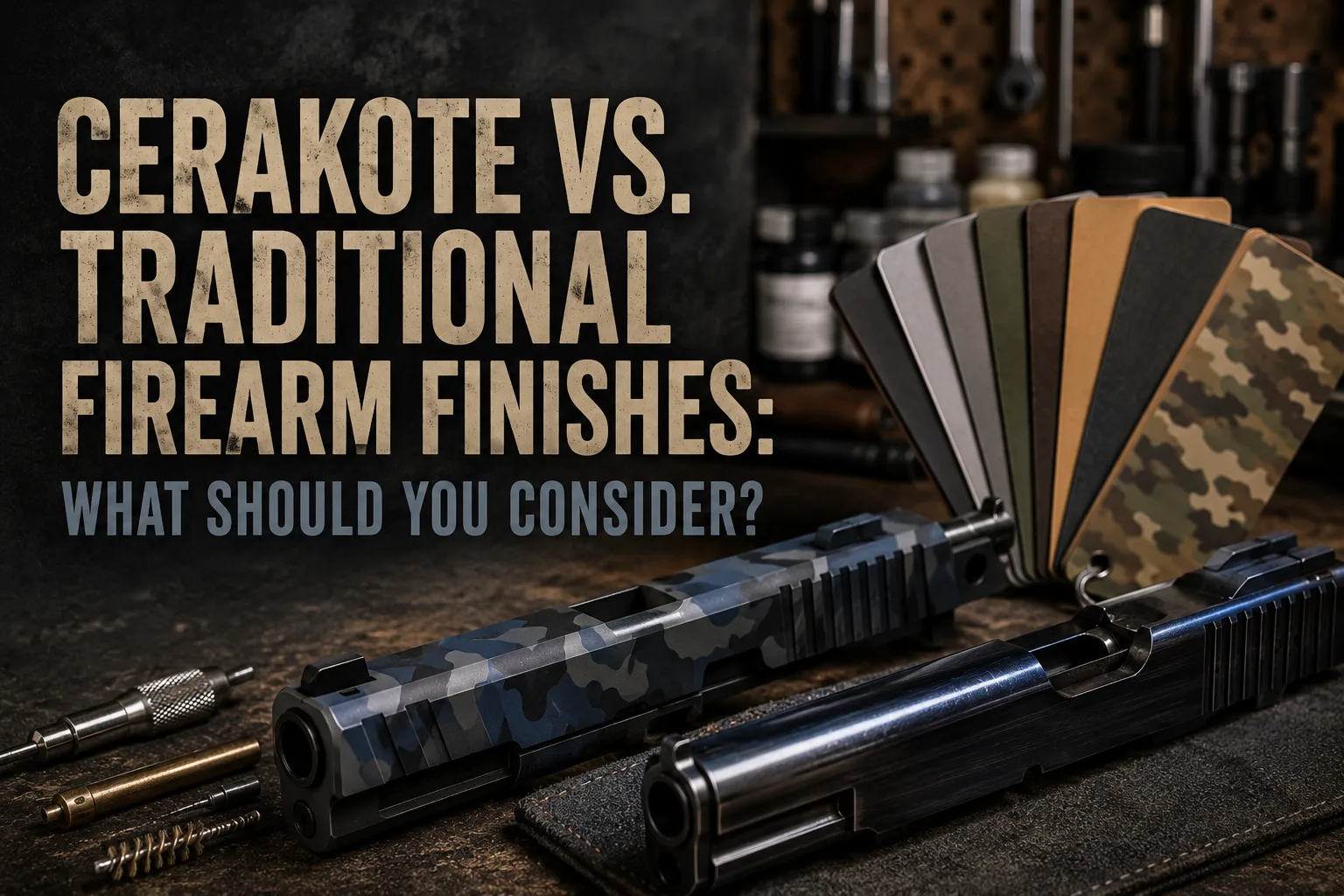
A firearm finish affects appearance, corrosion resistance, wear, maintenance, texture, and color. That makes finish selection an important part of a restoration, refinishing project, or custom build.
Cerakote is a familiar choice for firearm owners who want durable surface protection and a broad range of colors or patterns. Traditional finishes such as bluing and Parkerizing remain common and can suit owners who value a classic or period-appropriate appearance.
The right finish depends on the firearm, its materials, existing condition, intended use, and the result you want.
Cerakote is a thin-film ceramic coating used on firearms and many other products. Cerakote describes its H Series coatings as corrosion-resistant coatings designed to provide adhesion, hardness, flexibility, and wear resistance. The product line also comes in a wide range of colors.
Professional application involves several steps. At LoneStar Heritage Gunworks, a Cerakote project can include firearm evaluation, disassembly, surface preparation, masking, coating application, curing, reassembly, and final inspection. Critical dimensions, threads, and internal areas may need protection during the process.
Owners considering refinishing can learn more about firearm Cerakote in Emory, Texas and the shop’s single-color, multi-color, camouflage-inspired, and restoration services.
Traditional firearm finishes include several established surface treatments. Bluing is closely associated with many sporting firearms, hunting rifles, revolvers, shotguns, and older firearms. Parkerized finishes have also appeared on many service-style firearms.
These finishes have their own appearance, feel, maintenance needs, and relationship with the underlying metal. Suitability can depend on the firearm’s age and the importance of preserving its original character.
An older firearm with collector, family, or historical value deserves careful evaluation before its existing finish is changed.
| Consideration | Cerakote | Traditional Finishes |
|---|---|---|
| Appearance | Large color range and custom patterns | Often associated with classic firearm styling |
| Surface Protection | Ceramic coating designed for corrosion and wear resistance | Protection varies by finish and maintenance |
| Customization | Single colors, multiple colors, and patterns | Usually follows a more established traditional appearance |
| Preparation | Requires careful prep, masking, application, and curing | Process varies by finish type |
| Older Firearms | Can suit eligible refinishing projects | Can support a period-style appearance |
| Maintenance | Still requires proper firearm care | Depends on finish and use |
Start with the role the firearm fills. A hunting rifle carried through changing weather may have different finish priorities from a family firearm that spends most of its time stored.
Regular field use can expose exterior surfaces to moisture, handling, dirt, and abrasion. LoneStar Heritage Gunworks notes that Cerakote may suit firearms and components exposed to regular field conditions, along with projects involving worn finishes.
Think about where the firearm goes, how frequently it is handled, and how much exterior wear you normally see.
Appearance often plays a large role in finish selection.
Cerakote supports restrained and highly personalized designs. A firearm can receive a subdued single color, coordinated component colors, camouflage-inspired patterns, or a distinctive combination. LoneStar Heritage Gunworks reviews color selection, pattern complexity, firearm configuration, and coated surfaces before starting custom finish work.
Traditional finishes often suit owners who want familiar firearm styling. A blued finish, for example, can fit the visual character of a sporting firearm or older design.
Before scheduling refinishing, consider:
Finish work should begin with the condition of the firearm itself. Exterior wear may exist alongside corrosion, damaged components, fitting concerns, or previous modifications.
LoneStar Heritage Gunworks evaluates firearms as mechanical systems and offers diagnostics, repair, parts fitting, machining, and approved modification work. A firearm that needs mechanical attention can benefit from professional gunsmithing in Emory, Texas before or alongside refinishing.
This evaluation can be useful for older firearms and used firearms with an incomplete service history.
Refinishing an older firearm deserves extra thought when originality matters. Original finishes, wear patterns, markings, and surface condition can be part of the firearm’s history.
A fresh finish can make sense for a working firearm needing surface restoration. A collectible or sentimental firearm may call for a preservation-focused discussion.
Tell the gunsmith about family history, known previous work, and how you plan to use the firearm. That context helps guide the recommendation.
Online and dealer purchases can also lead to refinishing projects. A buyer may find the model they want and later decide that the existing color or surface condition does not fit their plans.
If a qualifying online purchase needs shipment to a local dealer, LoneStar Heritage Gunworks provides firearm transfers in Emory, Texas. The service covers incoming dealer shipments, required documentation, applicable processing, and pickup coordination.
After the firearm has been lawfully transferred, refinishing can be discussed separately based on condition and finish goals.
A useful consultation should cover more than color. Ask about the surfaces involved, preparation, disassembly, masking, expected appearance, and care after completion.
Photos of finishes you like can also help communicate the direction of a custom project.
Cerakote, bluing, Parkerizing, and other firearm finishes serve different goals. Cerakote can provide durable surface protection, broad color selection, and significant design flexibility. Traditional treatments can preserve a familiar appearance that suits many classic firearm designs.
A good refinishing decision starts with the firearm in front of you. Its condition, materials, age, use, and personal significance all matter.
For owners in Emory and the surrounding East Texas area, LoneStar Heritage Gunworks can evaluate a firearm, discuss finish goals, and explain the preparation and service involved before work begins. A professional consultation helps ensure the chosen finish fits the firearm and the owner’s plans.